China Gear Pump Supplier for Hydraulic Equipment
Match an existing pump or configure a new one from the details that control fit and performance.
Send the model code, nameplate photo, displacement, rotation, shaft, flange, port layout, and operating duty. We check the configuration against verified series data before anything is quoted.
- Single, tandem, and multiple-section pump inquiries
- Model-code and dimension-based replacement checking
- Configuration support for shaft, flange, ports, seals, and valves
- Small batches, repeat orders, and verified OEM requirements
State rotation as viewed from the drive-shaft end. Add a shaft-end photo when the marking is unclear.
Checked Against
Verified Series Data
Everything You Need to Source a Gear Pump
Identify the pump family, define the configuration, check the operating duty, and send a complete request. Jump to any step.
Selection Challenges
Why a matching housing is not enough
Supply Routes
Five ways to start your inquiry
Gear Pump Types
External, internal, single, tandem
Configuration Guide
Read the pump shaft to rear cover
Flow & Duty
Displacement, speed, and operating point
Applications
Mobile and industrial hydraulic systems
Interface Options
Flange, shaft, port, housing, rear drive
Single & Multiple Pumps
Define each section separately
Confirmation Process
Six steps from code to quotation
Installation & Startup
Protect the new pump from day one
Replacement & Custom
Cross-reference, obsolete, OEM routes
Order Quantities
Prototype, repair, batch, or program
Available Pumps
Browse by series and configuration
Inspection & Testing
Order-specific test evidence
Why Work With Us
Configuration before quotation
Packing & Identification
Clean ports, verifiable labels
Warranty Support
What to record before a claim
FAQs
Gear pump selection questions
Related Categories
Piston pumps, motors, valves, parts
Send Your Inquiry
Send a code or configuration, get a reply within 24h
A Matching Housing Does Not Confirm a Matching Pump
Gear pump order codes describe many combinations. A change in one code position can alter displacement, rotation, shaft, flange, port, seal, or an integrated function.
The old code is incomplete
Paint, wear, and replacement labels hide important suffixes. Send a clear nameplate photo and full pump views instead of typing only the visible base series.
Rotation is described from the wrong viewpoint
Clockwise and counterclockwise are defined from a specified viewing direction. State the direction you used and add a shaft-end photo.
Flow is requested without speed
Displacement and shaft speed together determine theoretical flow. Working flow also depends on volumetric efficiency and operating conditions.
The flange fits but the shaft or ports do not
Pilot diameter and bolt pattern are only part of the interface. Shaft spline or key, extension, port standard, port position, and installation space also matter.
Tandem sections are listed as one displacement
Each section needs its own displacement, pressure duty, and port arrangement. The front and rear sections may serve different circuits.
The system problem is assumed to be pump failure
Low pressure, noise, heat, and unstable flow can also involve suction restriction, fluid condition, contamination, relief valves, or leakage elsewhere in the system.
A Quotation Is Only Comparable When the Configuration Is Confirmed
Send your pump code, nameplate photo, and application first. You compare the actual configuration, not a similar-looking housing.
Choose the Route That Matches Your Starting Point
You can begin with a complete code, a worn pump, or only a hydraulic circuit requirement. Each route needs different evidence.
Identify the Pump Family Before Comparing Models
External and internal gear pumps use different construction and selection logic. Single, tandem, and valve-equipped versions add further configuration layers.
External gear pumps
Two externally meshing gears move fluid around the housing. Series differ in housing material, ratings, bearing design, compensation, interfaces, and options.
Internal gear pumps
An internal and external gear mesh inside the pump. Include the exact series; do not treat internal and external types as direct substitutes.
Single-section pumps
One pumping section supplies one flow output. Select by displacement, speed, pressure, rotation, shaft, flange, ports, seals, and application.
Tandem and multiple pumps
Two or more sections share one drive. Each section can have its own displacement and circuit duty, within shaft-torque, inlet, and series limits.
| Type | Typical Selection Focus | Do Not Assume |
|---|---|---|
| External gear pump | Group, displacement, rotation, interfaces, duty | Same group means full interchangeability |
| Internal gear pump | Series, pressure, fluid, mounting, noise and application requirements | An external pump is a drop-in substitute |
| Tandem / multiple | Every section, torque, shared inlet, valves | One displacement describes all sections |
| Integrated-valve pump | Valve function, setting, circuit behavior | A similar cover has the same valve |
Some series include relief, priority, flow-control, or unloading valves. Confirm the valve type and setting instead of assuming the rear cover is standard.
Read the Pump From Drive Shaft to Rear Cover
Work through the seven positions that define a gear pump. Mark any field as unknown and we will tell you how to capture it.
Series and frame group
Identify the product family and nominal frame first. Group labels do not define every dimension or rating across manufacturers.
You provide: Brand, series, and any group marking
We confirm: The product family the code belongs to
Displacement
Record cubic centimeters per revolution for each section. Do not estimate displacement from body width unless the series documentation supports that method.
You provide: cc/rev per section, or body dimensions
We confirm: Displacement against series documentation
Rotation
State clockwise, counterclockwise, or reversible only when the series supports it, and always state the viewing direction.
You provide: Rotation and viewing direction, plus a shaft-end photo
We confirm: Rotation matches the proposed configuration
Input shaft
Record straight keyed, tapered keyed, splined, or tang shaft geometry, with diameter, spline count and standard, extension, thread, and key details.
You provide: Shaft type, dimensions, and close-up photos
We confirm: Shaft geometry and torque suitability
Mounting flange
Record the flange standard, pilot diameter, number and position of bolts, bolt spacing, and mounting-face dimensions.
You provide: Flange photos with measurements
We confirm: Flange match against the exact drawing
Ports
Identify inlet and outlet sizes, thread or flange standard, side or rear position, orientation relative to the shaft, and shared or separate inlets on multiple pumps.
You provide: Port sizes, standards, and position photos
We confirm: Port arrangement for every section
Seals, covers, and options
State fluid, temperature, seal requirement, rear cover, through-drive, bearing, integrated valve, and any coating or labeling needs.
You provide: Fluid, temperature, and option requirements
We confirm: Seal and option compatibility
Match Displacement to Speed, Flow, and Operating Duty
Theoretical flow follows directly from displacement and speed. The operating duty decides whether the selected series can deliver it reliably.
Flow (L/min) = displacement (cm³/rev) × speed (rpm) ÷ 1000
Actual flow is lower and varies with volumetric efficiency, pressure, viscosity, temperature, wear, and speed. Pump input torque and power also depend on pressure and efficiency.
This is a theoretical estimate only. Use the selected series data and hydraulic-system calculations before finalizing a new application. Do not use a maximum catalog value as the normal continuous operating point unless the documentation explicitly allows it.
Operating data to provide
- Required working and maximum flow
- Minimum, rated, and maximum shaft speed
- Continuous, intermittent, and peak pressure
- Duty cycle and expected daily operating time
- Hydraulic fluid and viscosity range
- Minimum start and maximum operating temperature
- Inlet pressure or suction condition
- Filtration and cleanliness target
- External shaft loads, if any
- Noise or pulsation constraints
The more of these you can state, the faster the configuration check moves.
Gear Pumps for Mobile and Industrial Systems
Tell us the machine and circuit. Unusual fluid, high temperature, low inlet pressure, aggressive environments, or continuous high load should be stated before selecting a standard pump.
Construction and earthmoving
Auxiliary, steering, pilot, cooling, lubrication, implement, and machine-specific circuits, depending on the equipment design.
Agricultural machinery
Tractors, harvesters, implements, steering, lift, and auxiliary circuits where the selected series meets the machine duty.
Material handling and access
Forklifts, loaders, lift platforms, compact power units, and attachment circuits.
Industrial power units
Fixed-displacement supply for presses, machine tools, lubrication, circulation, and other documented hydraulic functions.
Commercial vehicles and special machines
Tail lifts, utility equipment, refuse equipment, and purpose-built mobile circuits after interface and duty confirmation.
Check your application
Send the machine, circuit function, and duty. We confirm whether a standard series fits or the requirement needs a special review.
Half of All Mismatched Pumps Trace Back to Rotation
State rotation as viewed from the drive-shaft end and attach a shaft-end photo. It takes one minute and prevents the most expensive mistake.
Confirm Every Mechanical and Hydraulic Connection
Availability depends on the series. Record each interface separately and confirm against the exact drawing, not the family name.
Mounting families
SAE, European, German, Italian, and manufacturer-specific two- and four-bolt patterns. Confirm pilot and bolt geometry from the exact drawing.
Shaft options
Straight keyed, tapered keyed, SAE spline, metric spline, tang, and special shafts. Torque capacity and the mating coupling must suit the duty.
Port options
Threaded, SAE O-ring, BSP, metric, and flange connections depending on the series. Record inlet and outlet separately and note position.
Housing and seal options
Aluminum and cast-iron families cover different pressure, durability, and weight needs. Seal choice must match fluid and temperature.
Through-drive and rear mounting
Some families drive an additional pump or accessory from the rear. Confirm transmitted torque, alignment, coupling, and the supported combination.
Have an interface drawing?
Upload the drawing with your inquiry. A dimensioned drawing settles flange, shaft, and port questions in one pass.
Define Each Section Separately
For a tandem or multiple pump, describe sections from the drive end to the rear. The complete combination must remain within the family's shaft-torque and inlet limits.
| Field | Front Section | Middle Section | Rear Section |
|---|---|---|---|
| Displacement | {cc/rev} | {cc/rev} | {cc/rev} |
| Working pressure | {value} | {value} | {value} |
| Peak pressure | {value} | {value} | {value} |
| Inlet arrangement | {shared / separate} | {shared / separate} | {shared / separate} |
| Outlet port | {size / position} | {size / position} | {size / position} |
| Circuit served | {function} | {function} | {function} |
Also provide input speed, total duty, shaft and coupling, valve arrangements, and whether one section can unload.
From Pump Code to Confirmed Configuration
Six checks stand between your first message and a quotation you can compare with confidence.
Send the details
Send the code, photos, application, quantity, and target condition. Any verified detail moves the check forward.
You provide: Code, photos, application, quantity
We confirm: Whether the evidence is enough to begin
Identify the family
We identify the pump family and section arrangement so the check runs against the correct series documentation.
You provide: Nameplate and full pump views
We confirm: Family and section arrangement
Confirm the configuration
Displacement, rotation, shaft, flange, and ports are confirmed one by one against the proposed pump.
You provide: Measurements or photos on request
We confirm: Each configuration position
Check the duty
Pressure, speed, fluid, temperature, and duty are compared against verified series data, not catalog maximums.
You provide: Operating point and fluid details
We confirm: Duty fit within series ratings
Review the proposal
You review the proposed code, drawing, condition, inspection scope, lead time, and warranty terms before ordering.
You provide: Your review and approval
We confirm: Final specification and terms
Confirm before packing
Order label, quantity, and available test evidence are confirmed before the pump is packed and dispatched.
You provide: Agreement on the evidence scope
We confirm: Identification and records before dispatch
Protect the New Pump From Suction and Contamination Problems
Most early pump failures are installation and system problems, not manufacturing problems. Work through both lists before the first full-load run.
Before installation
- Confirm rotation, shaft, flange, coupling alignment, ports, and valve settings
- Flush contaminated lines and inspect the reservoir, filters, hoses, and fittings
- Use clean fluid compatible with the pump seals and system
- Check suction-line size, restriction, leaks, and pump inlet conditions
- Avoid unsupported radial or axial shaft loads unless the pump option is designed for them
During startup
- Follow the pump and machine instructions for priming, filling, and venting
- Verify rotation before load; never run the pump dry
- Set pressure and begin at low load per the instructions
- Watch for aeration, cavitation noise, leakage, heat, and unstable pressure
- If performance is abnormal, record inlet conditions, speed, pressure, temperature, fluid, noise, and flow before changing parts
Keep in mind: A pump cannot compensate for an undersized suction line, an incorrect relief setting, contaminated fluid, or excessive downstream leakage.
Replace a Known Pump or Develop a Verified Variant
Four routes cover almost every replacement and development case. Each one has its own evidence gate.
Cross-reference checking
Provide the complete original code and photos. A cross-reference must compare configuration and ratings, not only nominal displacement.
Obsolete or unavailable models
A current series can be considered after shaft, flange, ports, rotation, envelope, and duty are checked. Adapter-based solutions change the installation and must be reviewed by the equipment designer.
OEM configuration
For repeat requirements, provide drawings, samples, target quantity, validation plan, markings, packaging, inspection, and change-control expectations.
Special fluids or environments
High temperature, fire-resistant or biodegradable fluid, low-temperature start, marine exposure, or unusual contamination all need seal, material, coating, and rating review.
Prototype, Repair, Batch, or Repeat Program
No MOQ. One pump for a repair and a scheduled OEM program follow the same rule: precise identification first.
One-piece and repair orders
A single pump is welcome. Repair inquiries need precise identification so the replacement matches the installed unit.
Small batches
Use a line-by-line configuration list: one pump code, quantity, and application per line.
Mixed dealer orders
Combine different series and configurations in one shipment with per-line references and labels.
OEM and repeat programs
Define the forecast, validation, labeling, packaging, revision control, and a stable reorder code.
One Pump for a Repair Is a Real Order Here
Wholesale and retail are both welcome. Send the code and destination; you get the same configuration check either way.
Browse by Series and Configuration
Product cards are examples of commonly requested families. Exact matching, condition, availability, and lead time are confirmed before quotation.
{Gear Pump Product 01}
- Series
- {Series}
- Type
- {External / Internal; Single / Tandem}
- Displacement
- {Range or exact value}
- Rotation
- {CW / CCW / Reversible if verified}
- Flange / Shaft
- {Configuration}
- Ports
- {Configuration}
{Gear Pump Product 02}
- Series
- {Series}
- Type
- {External / Internal; Single / Tandem}
- Displacement
- {Range or exact value}
- Rotation
- {Configuration}
- Flange / Shaft
- {Configuration}
- Ports
- {Configuration}
{Gear Pump Product 03}
- Series
- {Series}
- Type
- {External / Internal; Single / Tandem}
- Displacement
- {Range or exact value}
- Rotation
- {Configuration}
- Flange / Shaft
- {Configuration}
- Ports
- {Configuration}
Pump not listed? Most of our supply is confirmed case by case from the code and configuration.
Match the Test to the Pump and the Order
Ask for an order-specific inspection plan rather than a generic tested badge. These are the evidence types that can be agreed per order.
Label and code check
Order code compared against the physical pump and label.
Appearance inspection
Housing, machined faces, and workmanship reviewed.
Interface dimensions
Shaft, flange, and port dimensions measured against the drawing.
Rotation check
Rotation verified from the drive-shaft end.
Performance testing
No-load or performance testing to the agreed method, speed, and pressure points.
Leakage observation
Leakage observed at agreed pressures and durations.
Valve-setting check
Integrated valve settings checked where fitted.
Cleanliness and packing
Port plugging, cleanliness, and packing records before dispatch.
The exact test method, oil, speed, pressure points, duration, temperature, instrumentation, and acceptance criteria are verified for the ordered series. These photos are placeholders; replace with real bench evidence.
Configuration Before Quotation
The habit that separates a usable quotation from a guess: every claim below is tied to a checkable step in the process you just read.
We quote configurations, not housings
- Decode or reconstruct: the pump configuration from usable evidence, even when the code is incomplete
- Separate the requirement: nominal displacement is checked apart from shaft, flange, port, rotation, and duty
Single, tandem, and multiple are handled properly
- Section-by-section checking: each section gets its own displacement, pressure, and port confirmation
- Replacement routes compared: using verified drawings and ratings, not appearance
Repeat orders stay traceable
- Order-specific evidence: inspection, labeling, and packing defined per order
- Stable records: repeat configurations kept traceable through product and revision records
Keep Ports Clean and Configurations Easy to Verify
Packing protects the pump twice: against transit damage now, and against receiving confusion later.
- Shaft, flange, ports, valves, and labels protected
- Contamination and corrosion control appropriate to storage and shipment
- Configured models separated, never loose in one carton
- Quantities and codes easy to check on arrival
- One label per pump on mixed orders
- A packing list that maps carton references to the ordered configuration
Private-label, neutral-packing, barcode, or traceability requirements should be confirmed before production.
Record the Operating Conditions Before a Claim
Warranty depends on the product series, condition, order terms, and agreed use. Clear evidence keeps a claim fast and factual.
Confirm coverage before ordering
- Warranty period and scope for the quoted series and condition
- Exclusions and the agreed use the coverage assumes
- The claim procedure and who inspects what
- Whether pre-install guidance and remote support are included
If a problem occurs
- Stop operation where continued use could cause damage
- Send the order and pump code, installation date, and operating hours
- Record rotation, speed, pressure, fluid and viscosity, temperature, and inlet condition
- Add filtration status, noise or video, leakage location, and system inspection results
- Do not disassemble the pump unless the agreed support process requests it
Replacement or repair is offered based on the situation once the evidence is reviewed.
Send a Pump Code or Build the Configuration
Start with whatever you have. We will tell you what is missing before a pump can be proposed.
A configuration check, not an instant price list
- We review whether your information identifies an existing pump or needs an application configuration
- We request only the missing details, with photo and measurement guidance
- A proposal follows once the critical interfaces and duty are clear
- Reply within 24 hours, usually much faster
Direct Contact
Jeason
WhatsApp / Phone: +86-17701920885
Chat With JeasonRoom 118, Building 8, No. 138 Huicai Road, Tianhe District, Guangzhou, China
Gear Pump Selection Questions
The questions buyers ask most before sending a code. Every answer applies the same rule: confirm the configuration, not the appearance.
01What information identifies a hydraulic gear pump?
Start with the full model code, then confirm displacement, rotation, shaft, flange, ports, section arrangement, and any valve or seal options.
02How is rotation defined?
Rotation must be stated from the viewing direction specified by the manufacturer, commonly from the drive-shaft end. Include a shaft-end photo to avoid ambiguity.
03Can two pumps with the same displacement interchange?
Not automatically. Shaft, flange, ports, rotation, ratings, dimensions, seals, bearing arrangement, and integrated functions may differ.
04How do I estimate pump flow?
Multiply displacement in cm3/rev by rpm and divide by 1000 for theoretical L/min. Actual flow is lower and depends on efficiency and operating conditions.
05Can I replace a single pump with a tandem pump?
Only after the drive torque, mounting, shaft, inlet, space, circuit, pressure, and control requirements are engineered for the combination.
06What must be specified for a tandem pump?
List each section's displacement, pressure, outlet, circuit, and inlet arrangement from front to rear, plus common speed, shaft, and valve details.
07What causes a gear pump to be noisy?
Possible causes include aeration, cavitation, suction restriction, incorrect viscosity, contamination, misalignment, excessive speed, pressure pulsation, wear, or another system fault.
08Can the same pump run clockwise and counterclockwise?
Only if the exact series and configuration are designed for bidirectional operation. Do not reverse a standard pump without verified instructions.
09What should be checked before startup?
Confirm rotation and connections, clean the system, prime or fill as specified, verify suction conditions, align the coupling, and begin at the instructed load.
10What is needed for an OEM pump project?
Provide drawings, duty, quantity forecast, validation, marking, inspection, packaging, documentation, and revision-control requirements.
Question not covered? Send it with your pump code and Jeason will answer both at once.
Continue With the Correct Hydraulic Product
If the required product is not a gear pump, these categories cover the neighboring components.
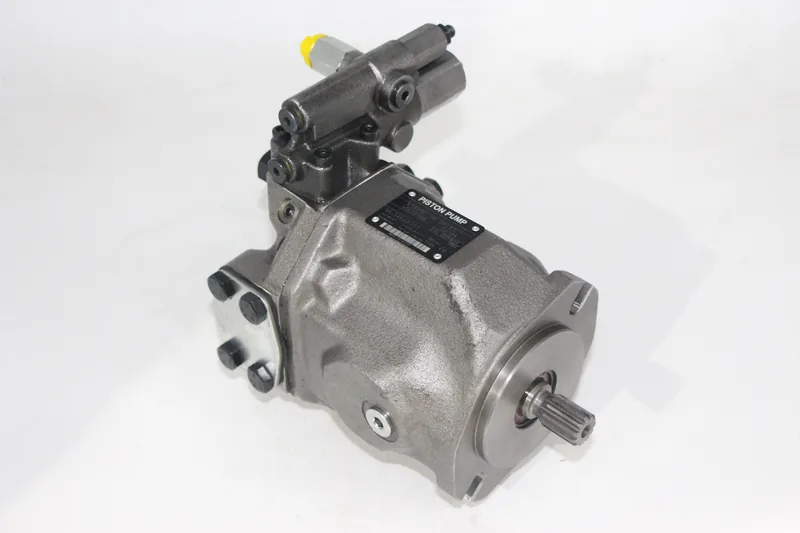 Featured
Hydraulic Piston Pumps
Variable and fixed piston-pump applications, with the same configuration-first checking process: model code, control type, drive, and duty confirmed before quotation.
View Piston PumpsHydraulic Vane Pumps
Vane-pump replacement and configuration checking.
View Vane PumpsGear Motors
Hydraulic rotary-output products; not selected as pumps by housing similarity.
View Gear MotorsPump Parts & Seal Kits
Verified service components for supported series.
View Pump PartsHydraulic Valves
Relief, priority, directional, and control products.
View ValvesHydraulic Power Units
Integrated pump, motor, tank, and control assemblies.
View Power UnitsHydraulic Filters
System cleanliness and filtration products.
View FiltersHydraulic Cylinders
Linear actuators and cylinder components.
View CylindersHydraulic Gear Pumps
You are here: single, tandem, and multiple gear pumps.
Back to Top